
Thu Thiem Station: a new infrastructure catalyst for Ho Chi Minh City’s next growth cycle
According to Prime Minister Pham Minh Chinh’s recent conclusion during his inspection trip from Binh Duong, Ba Ria – Vung Tau to Ho Chi Minh City, the city is facing major transportation pressure and severe traffic congestion, especially at gateways and along the East-West corridor. The Prime Minister emphasized: “The challenge today is not a lack of capital, but rather a lack of direction and efficient use of resources.”
However, to sustain its strategic position, the article argues that Ho Chi Minh City should not only focus on solving existing urban issues. The city also needs a long-term growth strategy that includes developing stronger economic drivers, such as innovation, commerce, investment, and high-quality human capital.
In that context, Ho Chi Minh City is gradually identifying a new strategic direction to enhance competitiveness. This involves redefining the city’s role - not merely as a transit point, but as an economic and cultural center that promotes regional connectivity and reinforces Southern Vietnam’s growth momentum.
The Strategic Role of a “Growth Catalyst”
Not just a station, Thu Thiem Station is envisioned as an “urban magnet,” integrating Metro Line 2 (Thu Thiem – Ben Thanh – Thu Thiem), the North-South high-speed railway, and the connection to Long Thanh International Airport. With an investment scale of approximately USD 5 billion, the project is expected to be completed and operational by 2030. This marks a strategic move to position the city as a major regional transportation hub, while also accelerating its transition toward a new urban development model.
Not stopping at transportation infrastructure alone, Thu Thiem Station is also integrated with an urban complex model following TOD principles. According to several experts, integrating infrastructure and urban development will help shorten travel time from Ho Chi Minh City to Long Thanh Airport from the current 90–120 minutes to approximately 30 minutes.
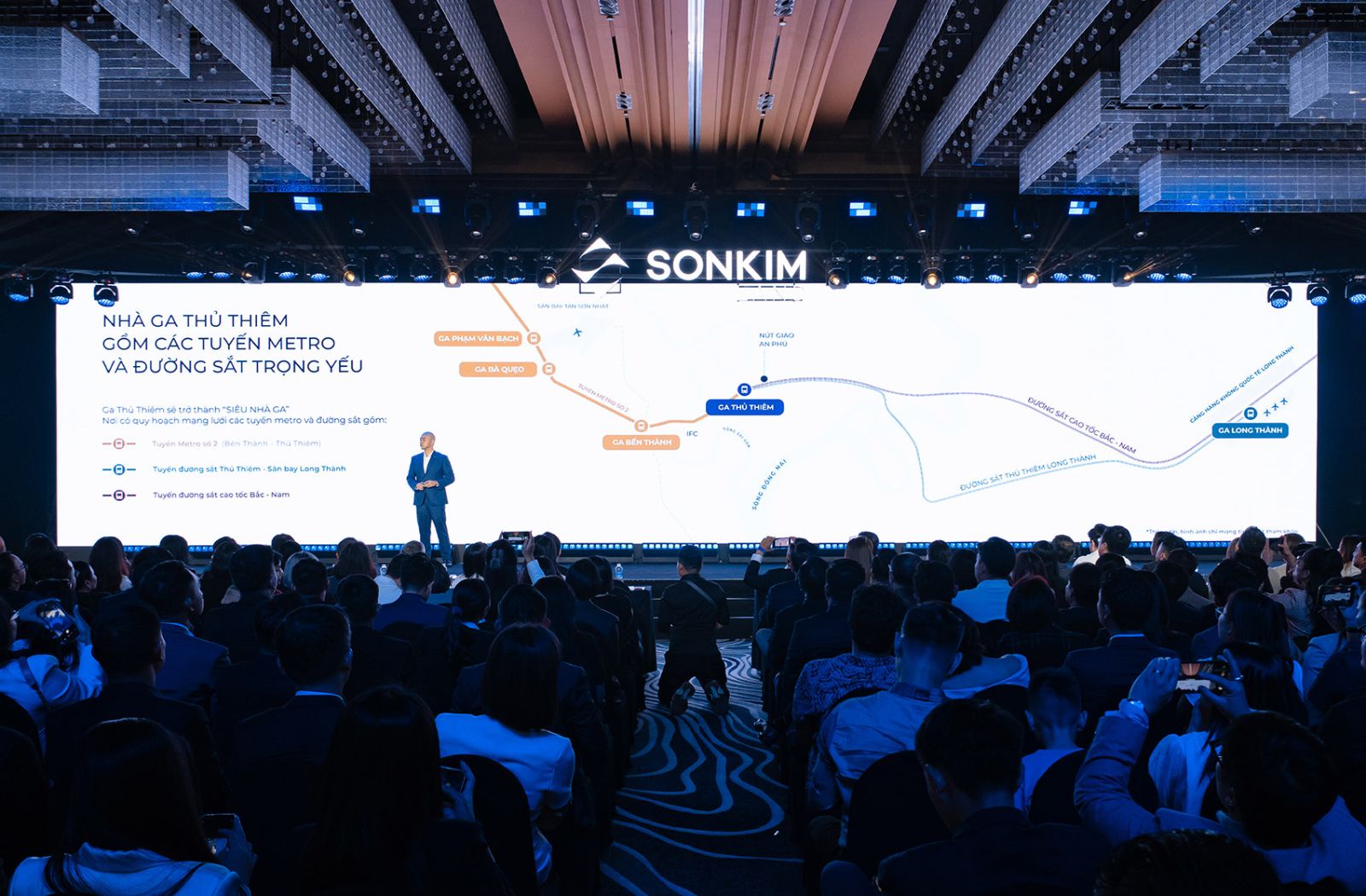 Core connectivity map of the Thu Thiem “mega terminal.” This vision is expected to unlock a new growth engine for socio-economic infrastructure in the southern region. Photo: SonKim Land.
The impact of these major transportation arteries is expected to be transformative: relieving congestion in the existing city center, strengthening inter-provincial connectivity following administrative mergers, and opening up new development space for the entire Eastern corridor. This is why Thu Thiem Station is often described as a “billion-dollar catalyst”, not only because of the scale of investment, but also because of its chain reaction effect as a trigger for a new development cycle.
From “Infrastructure Catalyst” to “Urban Magnet”
The history of urban development around the world shows that advanced TOD models in cities such as Tokyo and Hong Kong have long evolved beyond the role of pure transit hubs. Urban railway stations are now defined as “urban destinations” - places that integrate commerce, services, culture, and vibrant entertainment experiences.
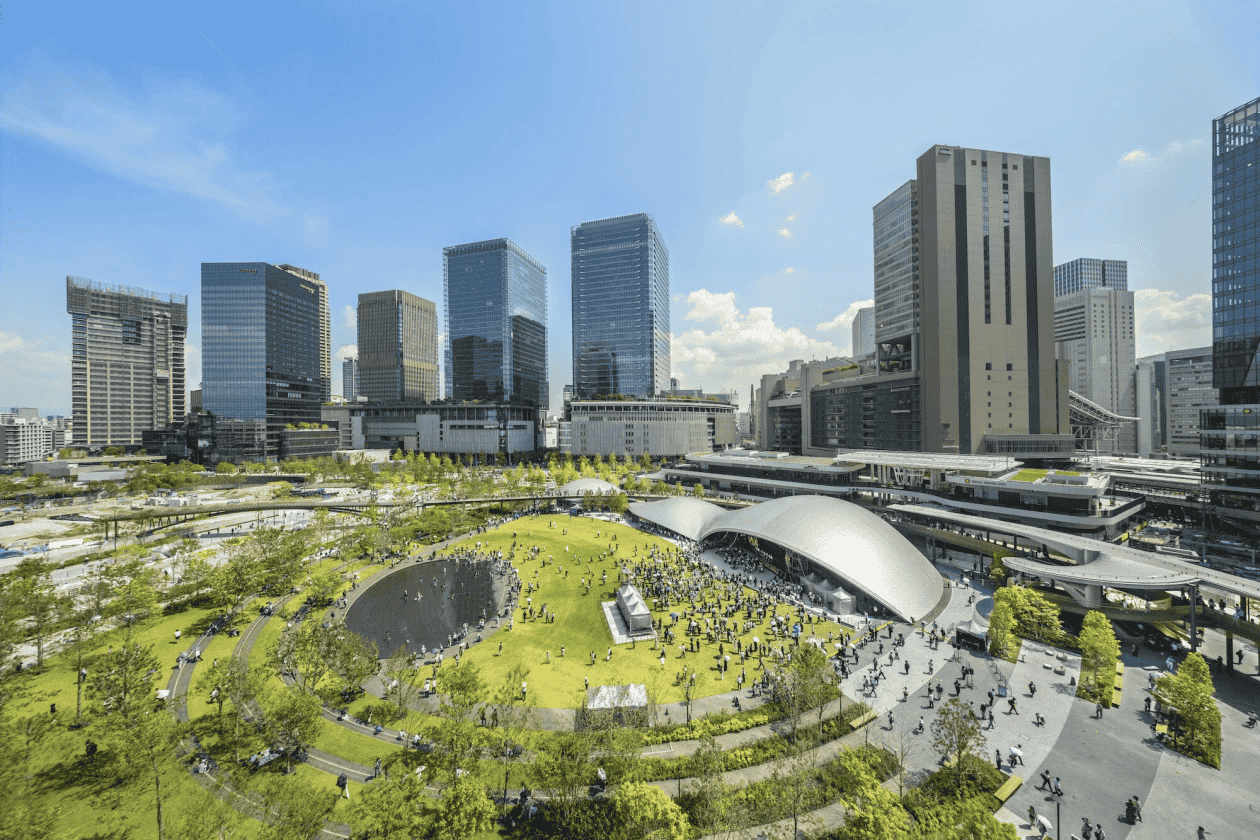
An integrated urban space following an advanced TOD model, harmoniously combining multi-level transportation infrastructure, public green spaces, and vibrant commercial–service complexes. Photo: Collected.
In Vietnam, this trend is gradually becoming a guiding principle for major urban areas. Rather than solely addressing mobility needs, next-generation stations are being planned as the nucleus of integrated multifunctional urban environments. When flows of commerce, services, and knowledge converge at one point, the area naturally becomes the center shaping new lifestyles and generating sustainable development value for the entire region.
Given the strategic position of Thu Thiem Station, the key question is which TOD model can maximize land-use value, lay the groundwork for leapfrogging infrastructure trends, and drive long-term economic growth. Lessons from countries with advanced TOD systems, such as Japan, suggest that positioning the station as the core connector between living, working, shopping, and entertainment functions is the optimal solution.
From an expert perspective, Troy Griffiths, Deputy Managing Director of Savills Vietnam, stated: “TOD models are long-term solutions to improve supply and create development land reserves.”
Beyond economic value, TOD also contributes significantly to socio-economic development by transforming urban landscapes, enhancing community living standards, increasing tourism appeal, and contributing to government revenue. In this sense, Thu Thiem Station is gradually affirming its role not only as a transportation hub, but also as an “urban magnet” where people, capital, and real estate opportunities converge.
One of the early developers to recognize this opportunity and proactively propose development ideas is SonKim Land, through its integrated urban complex project in the Thu Thiem Station area.
A Visionary Proposal with TOD 5.0
As a future infrastructure and economic gateway, Thu Thiem Station requires forward-looking solutions capable of leveraging global technological advancements. Instead of adopting safer versions such as TOD 3.0 or 4.0, moving directly toward the most advanced TOD 5.0 model presents a strategic opportunity to shorten development cycles and realize a fully integrated vision between transportation and urban development.
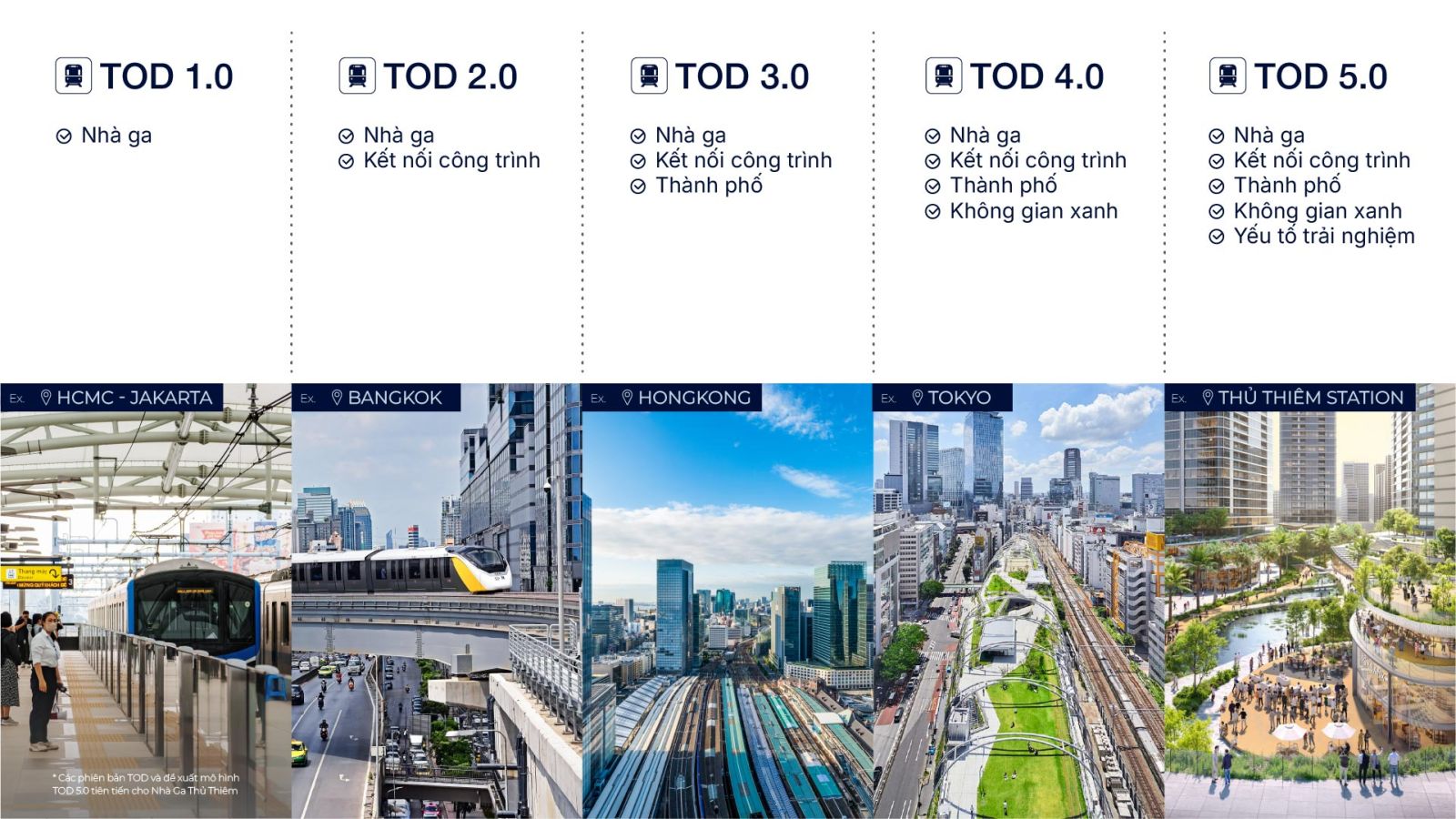 The evolutionary model of TOD generations worldwide and the planning orientation for a TOD 5.0 version in the Thu Thiem Station area. Photo: SonKim Land.
Currently, the area surrounding Thu Thiem Station remains in the early stages of ecosystem formation, creating tremendous potential for breakthrough urban restructuring. The greatest advantage of TOD 5.0 lies in its ability to reorganize urban space - transforming the station into a central node directly connected to commerce, services, and public amenities. This model optimizes land-use value in the urban core, reduces infrastructure pressure, and creates an integrated city capable of sustaining its own economic ecosystem.
This is also the strategic vision SonKim Land aims to pursue through its proposed “Thu Thiem Integrated Urban Complex,” introduced on May 17, with the goal of contributing a synchronized planning solution and positioning Thu Thiem as a symbol of next-generation integrated urban development.
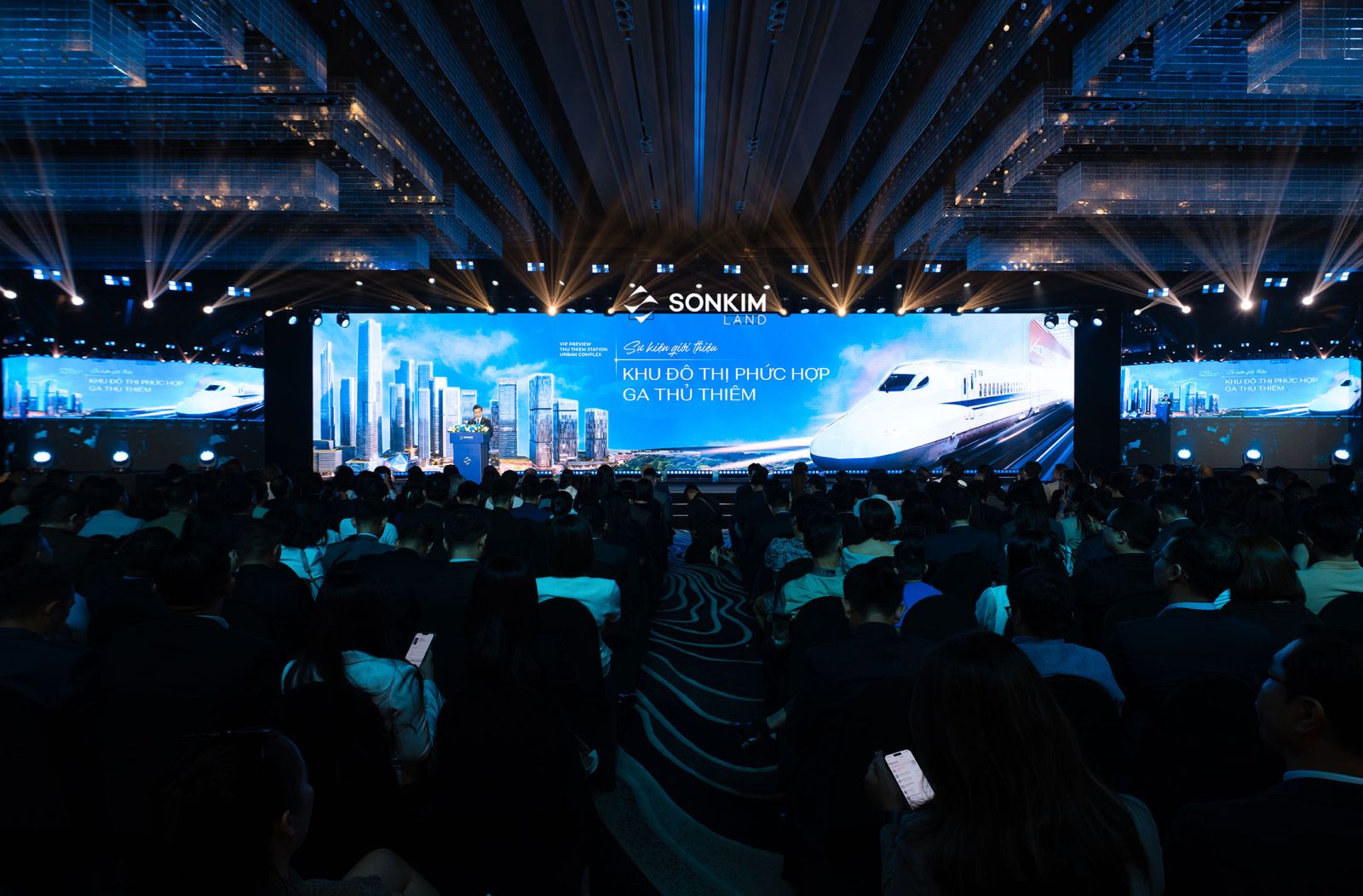 The event drew strong interest and wide participation from experts in design, architecture, finance, and the real estate sector
With the ambition of co-creating a breakthrough urban space alongside Ho Chi Minh City, SonKim Land not only introduced a new integrated urban model but also sought to elevate local living standards to international levels through advisory partnerships with two leading Japanese firms: Nikken Sekkei and Nippon Koei. By introducing this model to Vietnam for the first time, SonKim Land also demonstrated significant investment and research through collaboration with globally reputable industry leaders.
This also reflects the increasingly important role of private enterprises in contributing ideas for infrastructure and urban development in Ho Chi Minh City.
If urban railway systems and TOD models represent the infrastructure of transportation, then Thu Thiem Station can be considered the foundation of socio-economic infrastructure. Amid the eastward expansion trend, this hub possesses the scale and potential of a new growth pole thanks to its multi-layer connectivity between transportation, commerce, and urban space.
The infrastructure momentum, together with the participation of developers such as SonKim Land, is opening up major opportunities for Thu Thiem to break through - becoming an economic magnet and a pioneering model of advanced integrated urban development in Vietnam.