
TOD 5.0 - The world's most advanced evolution of TOD: when the station becomes the heart of the city
When Mobility Is No Longer Just About Connectivity, But About Urban Experience
Ho Chi Minh City is entering a transformative phase, driven by major infrastructure projects such as Long Thanh International Airport, metro lines, high-speed rail, and regional transportation networks. However, rapid urbanization has also intensified challenges related to mobility, the growing separation between living and working environments, and the shortage of high-quality public spaces.
In this context, leading global cities are no longer focused solely on moving people faster. Instead, they are seeking to enhance the quality of the journey itself. This philosophy lies at the core of SonKim Land's vision when introducing the concept of the Thu Thiem Station Integrated Urban Development on May 17, 2026—placing people at the center of every development decision and striving to elevate urban living standards for Vietnamese communities.
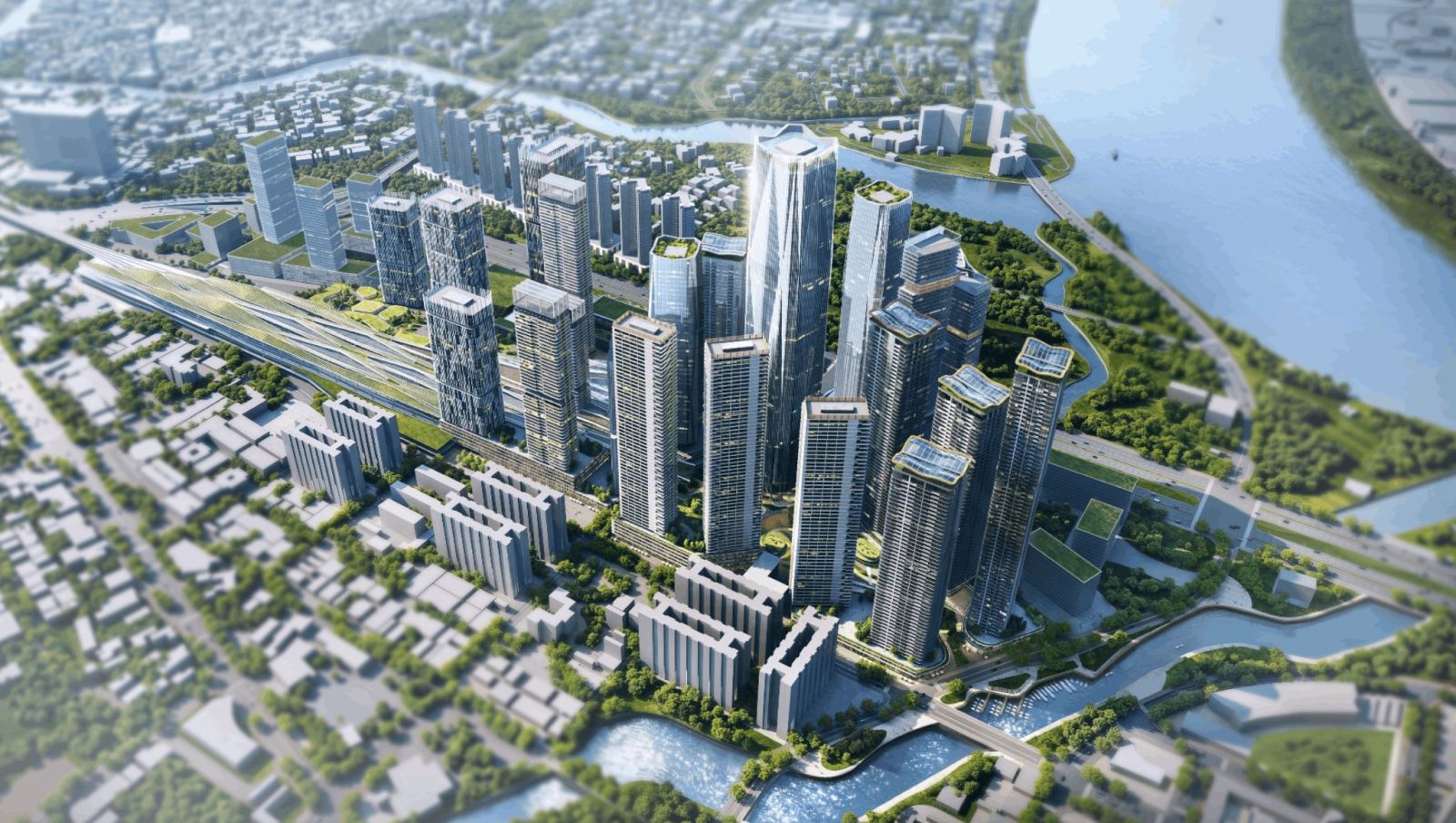
SonKim Land's proposed TOD 5.0 model for the Thu Thiem Station precinct.
The Evolution of TOD and Urban Ecosystems
Global metropolitan hubs such as Tokyo, Singapore, and Hong Kong regard TOD as a fundamental solution to urban planning and city operations. In Tokyo, railway stations serve not merely as transit nodes but as integrated destinations that combine residential, commercial, office, cultural, and public spaces, shaping the rhythm of urban life itself.
The TOD model has undergone four major stages of evolution. TOD 1.0 began with stations functioning solely as physical transit hubs, largely disconnected from urban life. TOD 2.0 introduced greater integration, connecting buildings and amenities within walkable distances. A notable example is Bangkok's BTS Skytrain network, which directly links stations to shopping centers through elevated pedestrian bridges.
TOD 3.0 further transformed stations into the core of multifunctional ecosystems, enabling residents to live, work, and socialize within interconnected urban environments, as exemplified by Hong Kong's extensive multi-level skywalk network. Today, leading cities are advancing toward TOD 4.0, where sustainability and green spaces take precedence over density. One prominent example is Azabudai Hills in Tokyo, featuring "vertical forests" and pedestrian-oriented networks designed to reduce carbon emissions.
Building upon this evolution, SonKim Land proposes the TOD 5.0 concept for the Thu Thiem Station Integrated Urban Development. At this stage, the station is no longer merely transportation infrastructure or a commercial hub. Instead, it is envisioned as an integrated destination where mobility, culture, commerce, and lifestyle converge within a seamless urban ecosystem.
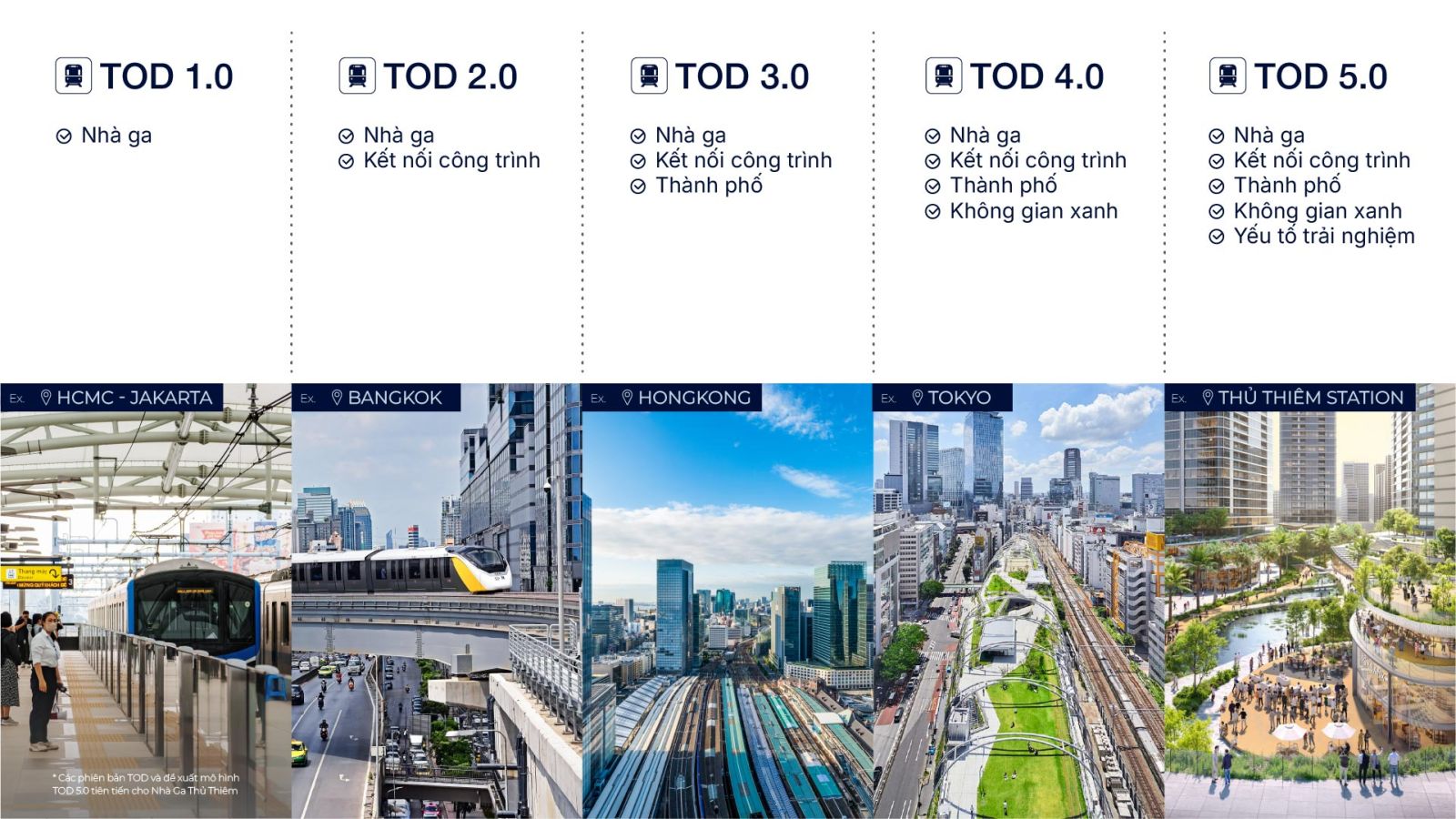
TOD 5.0 is a place where people do not simply pass through—it is a place where they choose to stay, interact, and engage as part of a new urban way of life.(source: SonKim Land)
A Vision Shaped by Global Expertise
To bring this vision to life, SonKim Land is collaborating with some of the world's leading consulting firms for the Thu Thiem Station Integrated Urban Development. Nikken Sekkei (Japan) is responsible for the master planning concept, Nippon Koei (Japan) is leading the station development concept, while Arup (United Kingdom) oversees transportation and connectivity planning to ensure a seamless TOD experience. Together, these international partners are helping shape what could become Ho Chi Minh City's next iconic landmark.
According to the proposed vision, the station core will serve as the central orchestrator of the entire urban precinct, directly connecting the city center with major transportation corridors and surrounding developments. The architectural design embraces openness and vertical integration, featuring office towers, retail and commercial complexes, and a contemporary art museum that together create a distinctive gateway to Ho Chi Minh City's emerging urban center and the broader region.
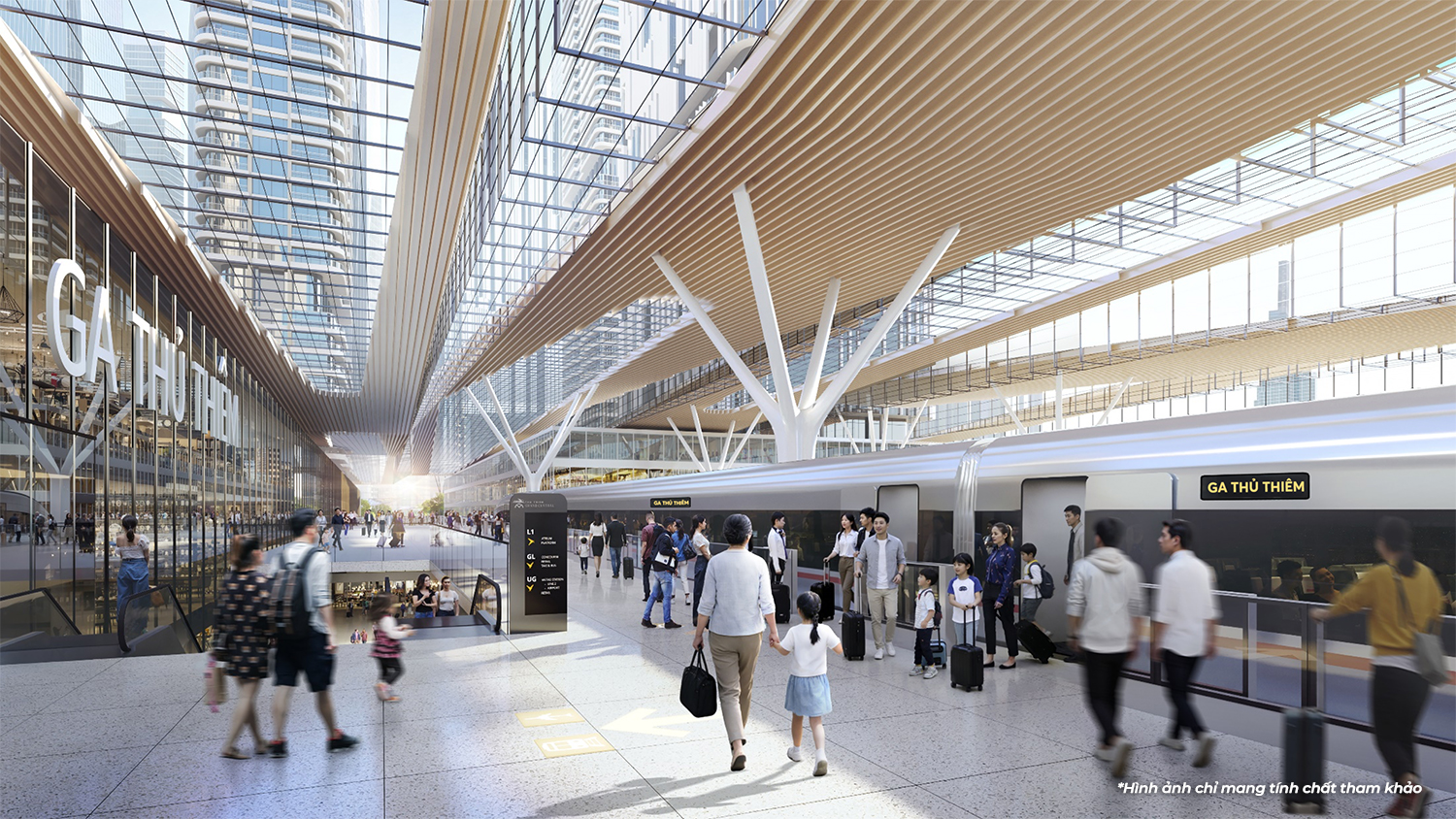 The TOD 5.0 model envisions Thu Thiem Station as a large-scale 'experience destination'
Unlike traditional TOD developments, TOD 5.0 at Thu Thiem Station is conceived as a large-scale experiential destination, where transportation serves as the foundation connecting commerce, culture, entertainment, and community engagement.
.png)
A signature "urban forest" will create a distinctive landscape experience, fostering a stronger connection between people and nature.
Leveraging the future station's high passenger volume, the development is also expected to integrate aviation-related services such as early airline check-in and direct baggage transfer to the airport—a model yet to be introduced in Vietnam. This innovation would allow visitors to extend their time in Ho Chi Minh City through hospitality, shopping, entertainment, and service experiences, generating greater economic value and strengthening the attractiveness of the entire district.
More than a conventional real estate development, the Thu Thiem Station Integrated Urban Development is envisioned as a new economic engine for Ho Chi Minh City—enhancing regional connectivity while setting a new benchmark for the future of urban development.